This is the blog page for the second student group in the Future Communities project. Jadie Maitland, Yixuan Yang, Mou Wang and Michelle Kayitesi are running this page and have used it to share the development of their project.
Jadie Maitland:j.maitland0520241@arts.ac.uk
Yixuan Yang:yangyixuanch@163.com
Mou Wang:m.wang0620242@arts.ac.uk
Michelle Kayitesi:m.kayitesi0720231@arts.ac.uk
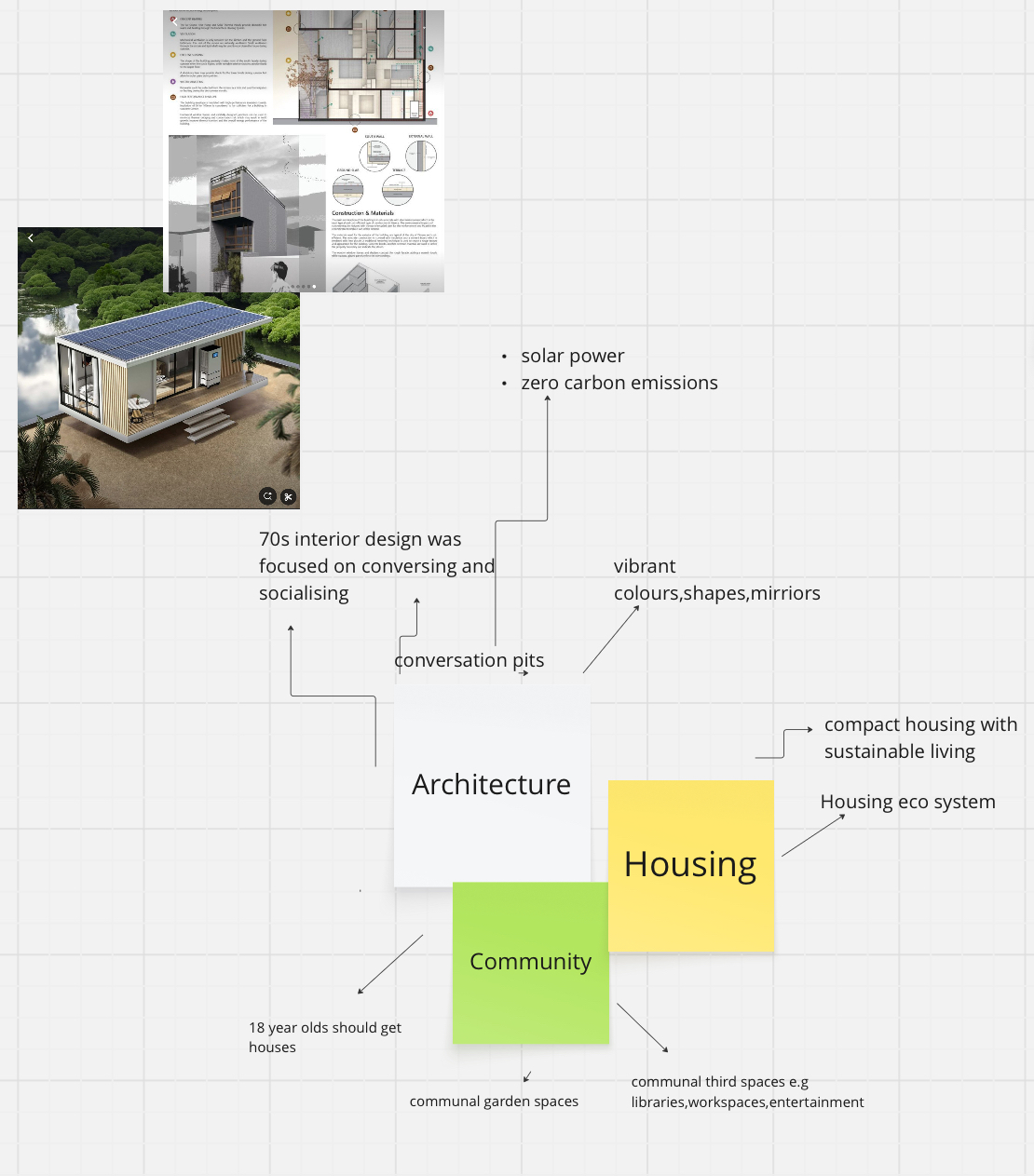
Our group has been envisioning alternative forms of affordable housing, rooted in the principles of living simpler, cosier, and more connected with community and with nature. Through our exploration we’ve considered concepts of free housing for young people, and the abundance of empty homes in conjunction with the homelessness crisis.
In dreaming of our ideal future living, we’ve regarded the importance of community third spaces, access to greenery/ growing own food, and colourful, soul-fulfilling design.
We looked at a lot of different housing types and neighborhood cultures, and we looked at a lot of different kinds of community forms
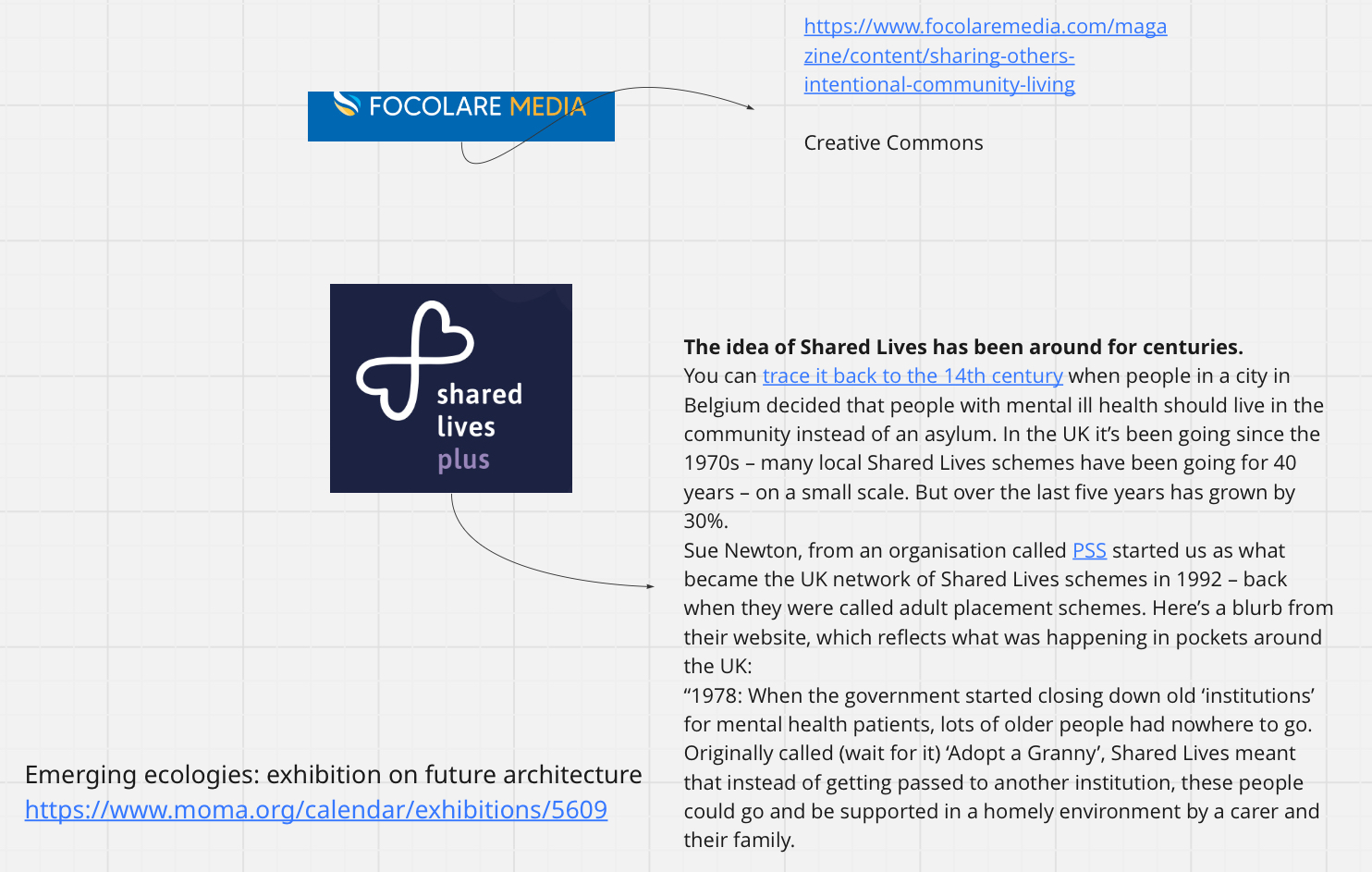
We want to establish a community that includes humanity, history, ecology, cultural rules and beneficence
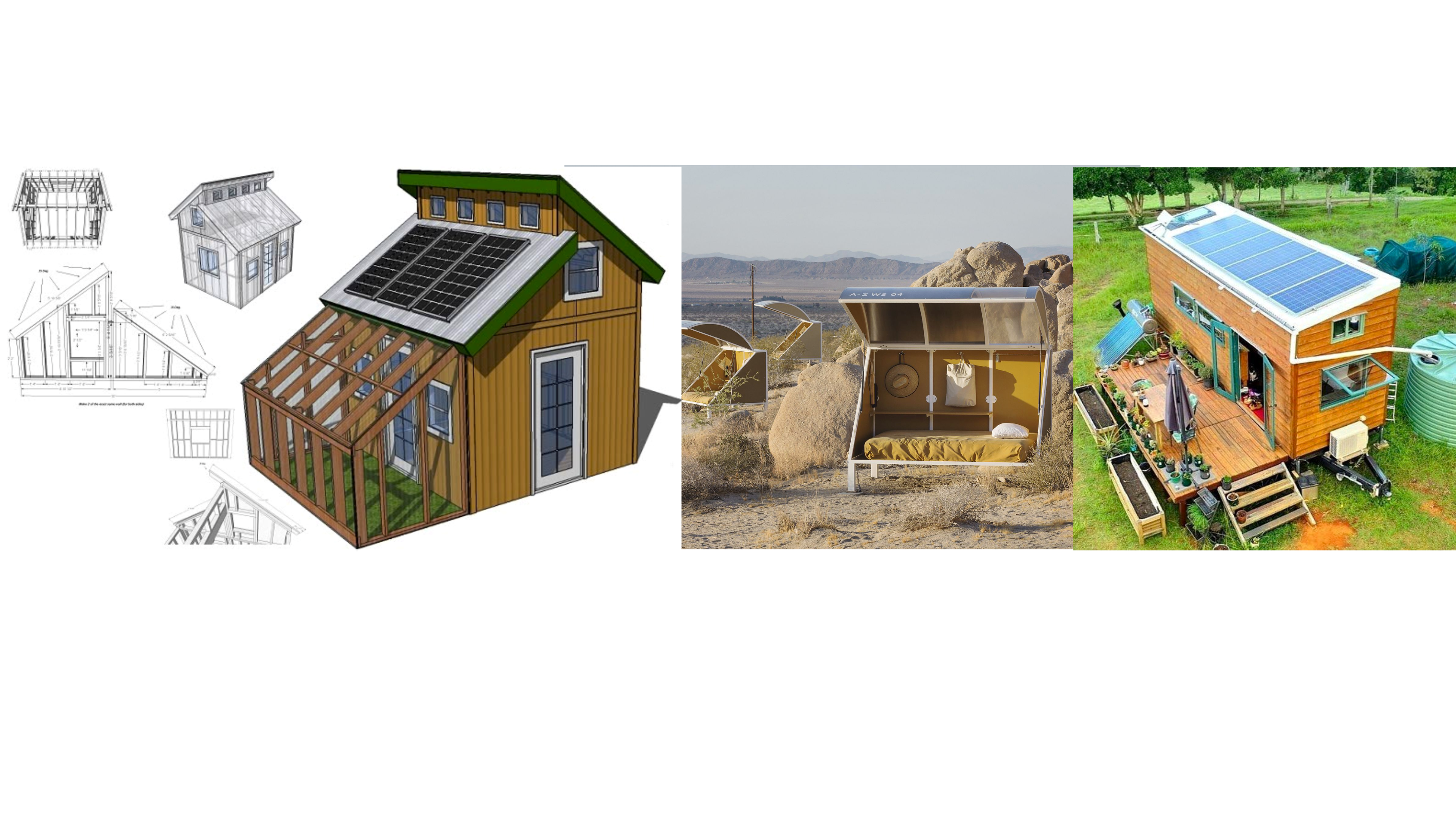
Figure: three different types of housing community
We have each collated ideas of our dreams for the future of housing. We hope our sketches can spark ideas for the potential of the home unit.
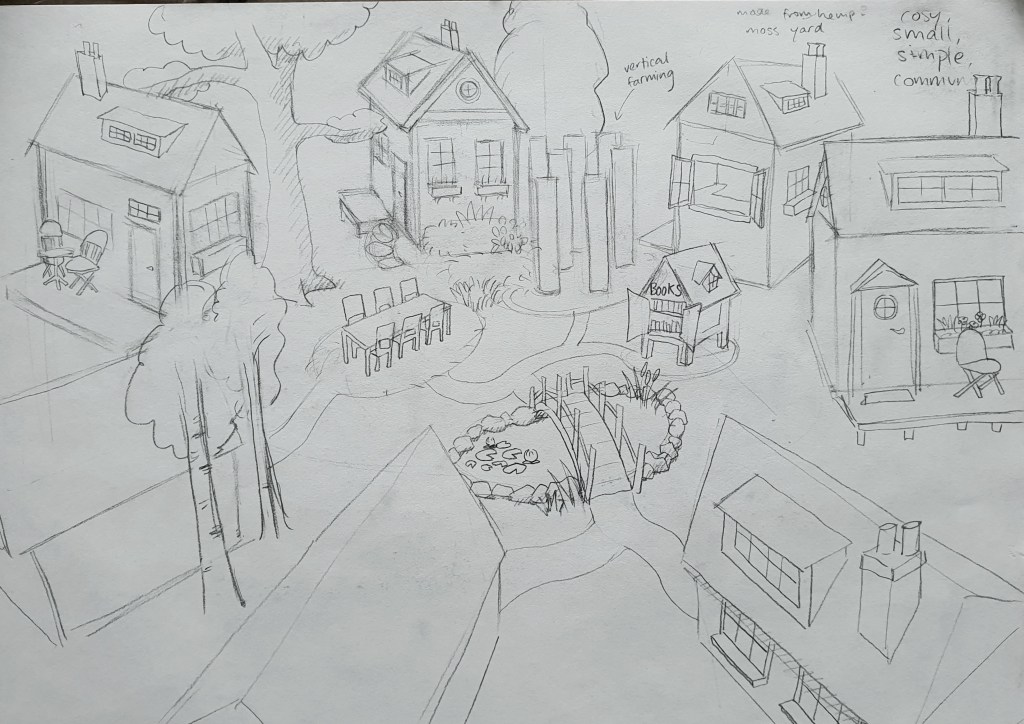
Jadie:
I imagine a collection of tiny homes, united by paths in a moss lawn. Overgrown with native plants, this home houses people, plants and critters. A communal dining table fills the grove with warm bellies and shared laughter, sated from food grown mere feet away. Private decks allow for quiet solitude, and time for reading a good book (from the communal book share of course). In the summer, tadpoles are born in the pond, and the outdoors becomes as much a home as the indoors.
Yixuan:
I imagined a space with more living potential, where people are free to choose how they want to share their lives with others, and the combinatorial and creative power of these living places is extraordinary. These shared living places can be installed in any combination like capsule houses, made up of people with common interests and life pursuits. You can imagine! When you finish reading a classic theatre script (the library will have many books from everyone’s collection to read as you please), excitedly recalling the rippling story in the script, you can walk out of your room and step onto the stage and perform the story you want to perform yourself ……

Mou Wang:
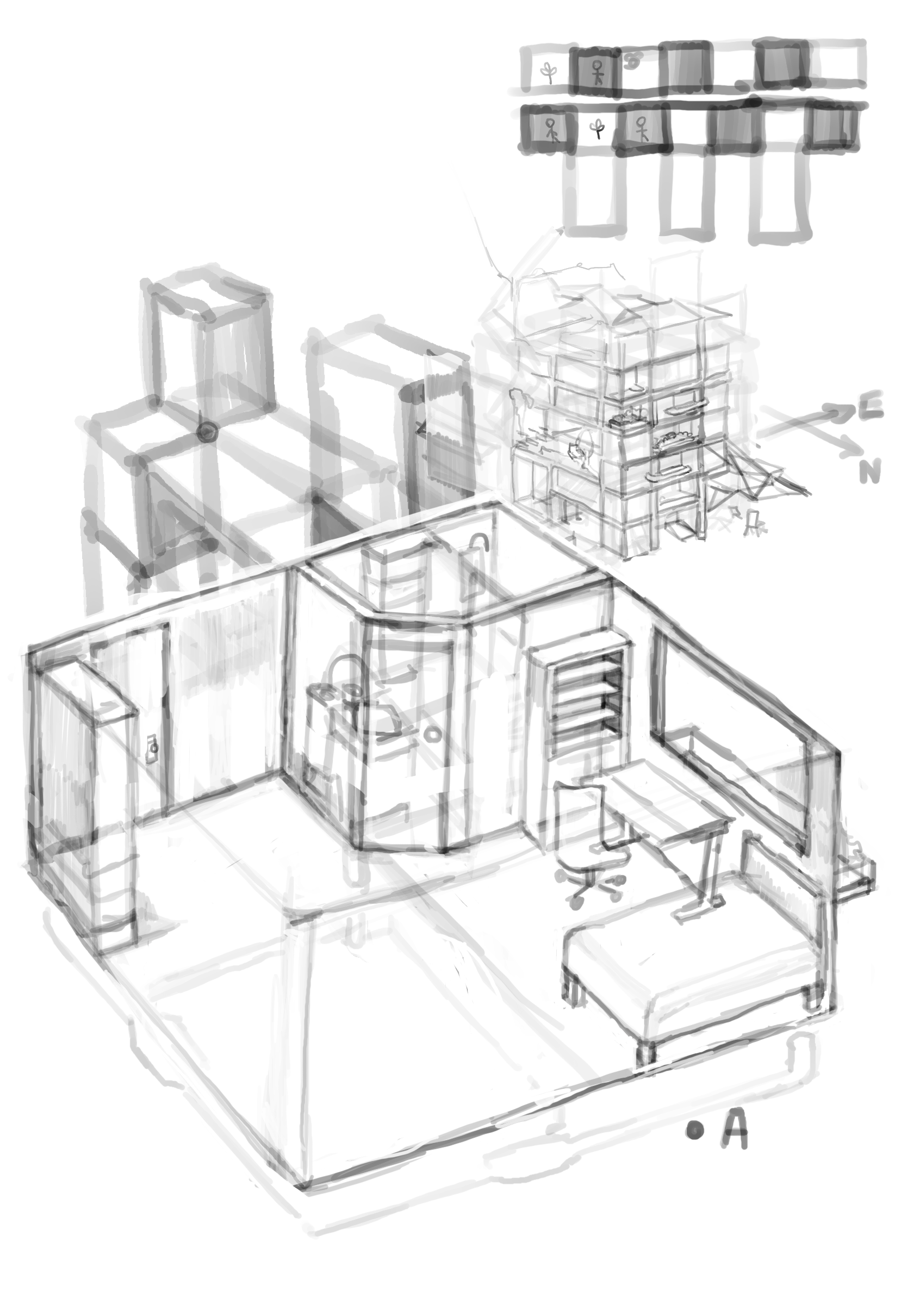

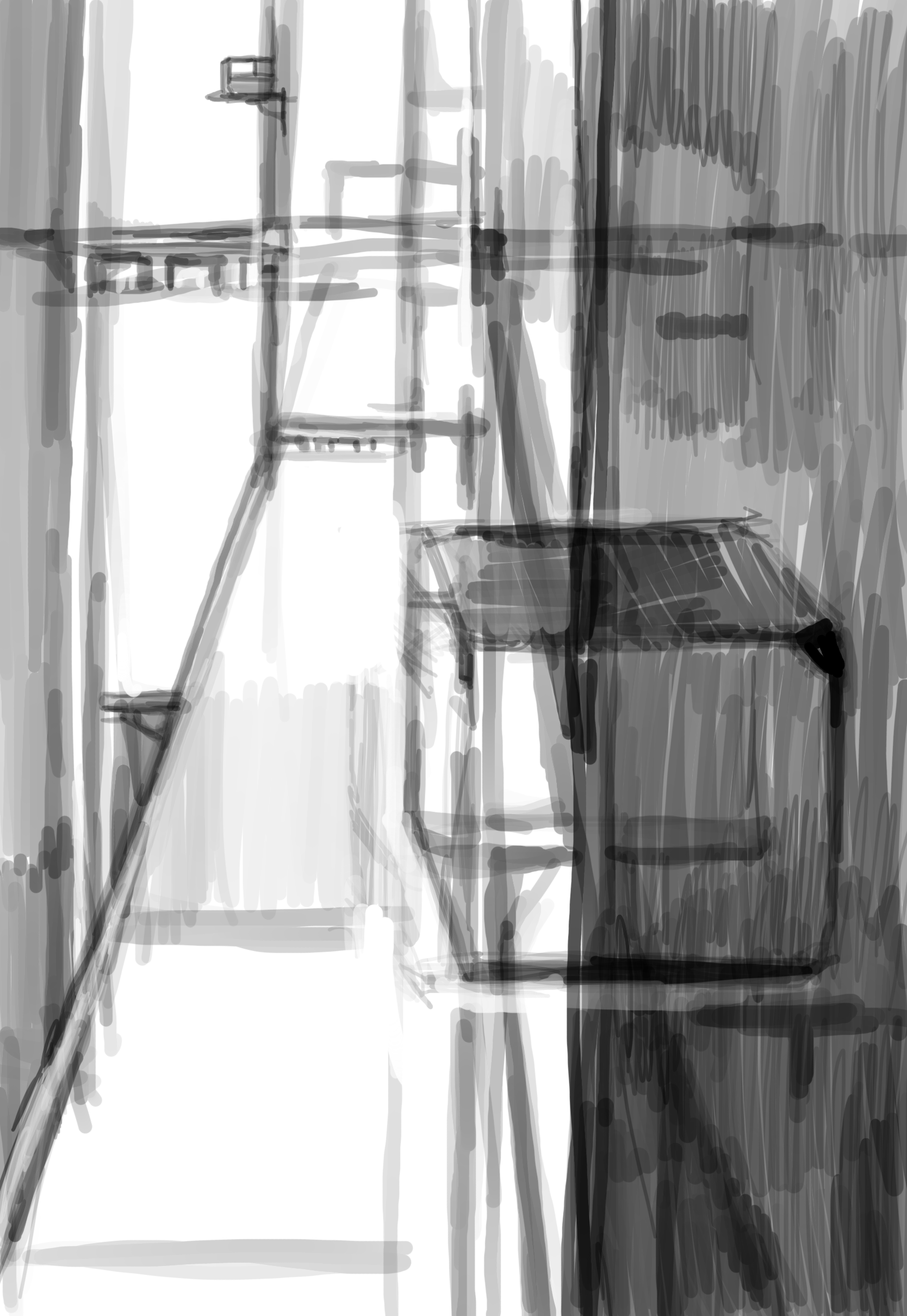
Fig.1 I tried to design a type of flat with no direct adjoining private rooms. Each room has separate toilet and bathroom and there’s shared facilities like communal living room ,kitchen , gym and so on. The private rooms are separated by vertical farms that can produce seasonal vegetables or shared gardens.
Fig.2 I tried to design a modular housing structure that is low-cost and can be customized according to the needs of residents. This structure is mainly made of steel frame, recycled glass insulation material, shock-absorbing filler and bricks. The entrances and exits of wires, water pipes and other pipelines are integrated and concentrated in one pipeline interface. This modular house consists of independent individual bedrooms and other public rooms/spaces. The individual bedrooms can be assembled with the trailer to be used as a mobile home. Other optional public modules include toilets, kitchens, stairs, balconies, gardens, living rooms, libraries and banquet halls, etc.
To build this modular house, a solid foundation needs to be laid in advance, and a building support composed of parallel steel structures is exposed on the surface. An intelligent program can be used to count the living needs of different residents, and modular design can be carried out based on the data statistics to automatically generate a design drawing. During construction, different modules can be placed and fixed in corresponding positions according to the design drawing. If residents need to change the location of their rooms or add/remove rooms, they can simply open the interface to make the changes.
Fig.3 As long as a single modular room mentioned in fig2 can be connected to nearby water, electricity and optical fiber through pipelines, it can be fixed in some environments that are generally considered unsuitable for living but have solid structures, such as the abandoned overpass in the picture.
Michelle Kayitesi :

ECO Home Concept 1: Modern Solar-Powered Eco-Friendly House
This eco-friendly home design features a sleek, modern two-story structure powered by a nearby solar power plant. Designed with sustainability at its core, the home relies on clean, renewable solar energy to meet its electricity needs. Solar panels work by capturing sunlight and converting it into electricity, which can either be fed into the local power grid or stored in batteries for later use.
While the most solar energy is typically captured in areas closer to the equator due to more consistent sunlight, modern solar panels are effective in a wide range of climates. As long as there is access to daylight even in more temperate or cloud-prone regions solar technology can generate usable electricity, making it a viable energy source in many parts of the world.
A key feature of this eco-home is its green roof, which is covered in vegetation. Green roofs act as a natural form of insulation, helping to keep indoor spaces cooler during hot months and warmer in colder seasons. This reduces the home’s dependence on artificial heating and cooling systems, significantly lowering overall energy consumption. In addition to improving energy efficiency, green roofs also contribute to better air quality, stormwater management, and biodiversity.
Potential Drawbacks:
While this eco-home offers numerous environmental and cost-saving benefits in the long term, there are some challenges to consider:
High Initial Costs: Installing a solar power system can be expensive, particularly when factoring in the cost of high-capacity solar panels and energy storage systems like batteries.
Energy Storage: Storing solar energy for use during nighttime or cloudy periods requires advanced battery systems, which can add significantly to the overall cost.
Land Use: Solar panels, especially large arrays for powering multiple homes, require substantial space, which may not be ideal in densely populated or land-limited areas.
Variable Efficiency: Solar power production depends heavily on sunlight availability. Weather conditions, seasonal changes, and geographic location all affect the efficiency and reliability of solar energy.
Environmental Impact of Production: Although solar energy is clean, the mining and processing of materials like silicon, lithium, and rare earth elements used in solar panels and batteries can have harmful environmental effects, including habitat disruption and pollution.
Despite these drawbacks, the long-term environmental and economic benefits of solar-powered homes continue to make them a compelling option for sustainable living. With thoughtful planning and advancements in technology, many of these challenges can be managed or reduced over time.
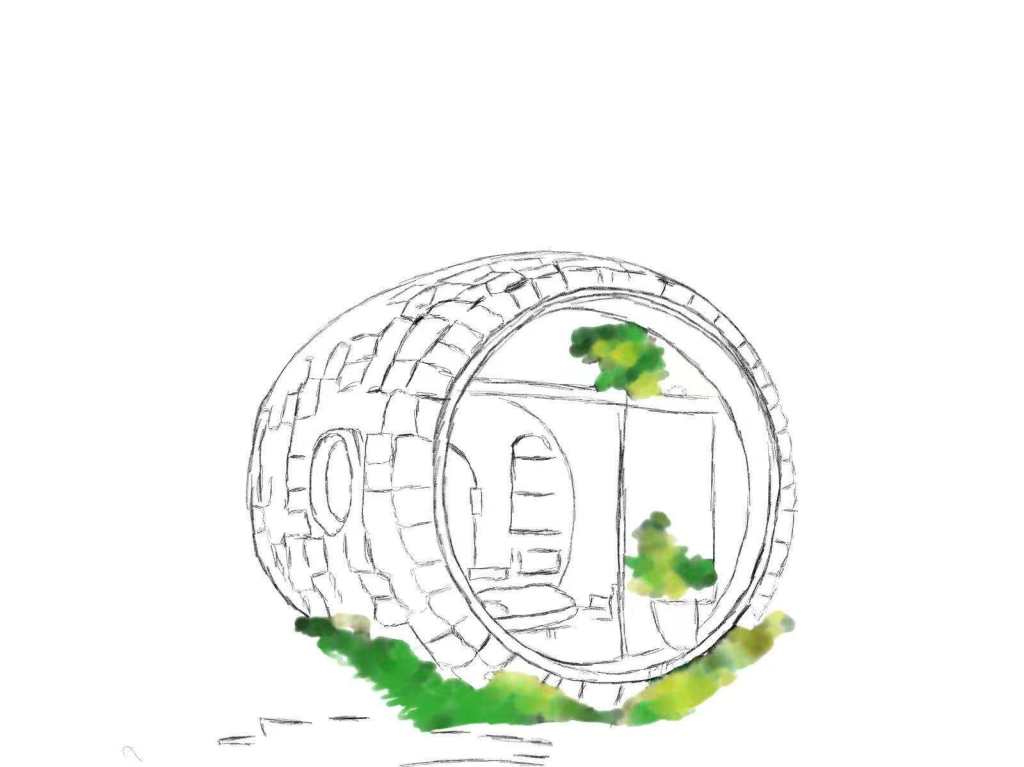
Eco Home Concept 2: Nature-Inspired Round House
This eco-friendly home concept is centered around a modern round house design that blends aesthetics, sustainability, and harmony with the natural environment. Unlike traditional rectangular homes, round houses offer several unique advantages that make them an ideal choice for sustainable living.
The circular shape of the house is not only visually striking but also highly functional. Its aerodynamic design naturally deflects strong winds, making the structure more resilient in extreme weather conditions such as storms and hurricanes. This durability reduces the need for repairs and structural reinforcements over time. Additionally, round houses use fewer building materials due to their compact and efficient layout, making construction more resource-efficient.
From an energy standpoint, the curved shape improves insulation and reduces drafts by eliminating sharp corners, which are common sources of heat loss in conventional homes. This makes round houses easier to heat in winter and cool in summer, resulting in lower energy consumption and reduced utility bills. The design also offers improved acoustics and a sense of spatial flow, creating a quieter, more relaxing indoor environment.
One of the most distinctive benefits of a round home is the atmosphere it creates. The smooth, flowing lines encourage a sense of calm and creativity perfect for those seeking a peaceful retreat from the fast-paced rhythms of urban life. When located in a bustling city, the round shape acts as a soft buffer from the outside world, promoting mindfulness and mental well-being.
Design Inspiration and Natural Integration
The inspiration for this home draws from one of nature’s most common and humble elements: a rock. Often unnoticed, rocks are symbols of stability, endurance, and quiet strength. Found everywhere in nature, they are grounded and unpretentious, yet their strength or fragility is shaped by the materials they are made from such as granite, limestone, or sandstone.
This rock-inspired concept is reflected in the home’s natural aesthetic and low-impact footprint. The home is designed to sit gently within the landscape, surrounded by lush greenery. Rather than dominating its environment, the house integrates with it, appearing as though it emerged organically from the earth. The surrounding vegetation not only enhances the home’s visual appeal but also contributes to air purification, biodiversity, and temperature regulation, reinforcing its eco-friendly credentials.
Potential Drawbacks:
While the design has many strengths, there are some challenges to consider:
Limited Sunlight: Dense vegetation can block sunlight from entering the home, potentially reducing natural light inside and impacting solar energy efficiency if solar panels are used.
Maintenance Demands: Homes surrounded by nature often require more upkeep. Falling leaves, plant overgrowth, and pests can lead to regular maintenance needs, while high humidity in shaded areas may contribute to mold, mildew, and moisture-related damage.
Accessibility Issues: Remote or heavily vegetated locations may be less accessible, lacking easy connections to roads, public transport, utilities, or emergency services. This can make everyday living less convenient and may increase infrastructure costs.
Despite these considerations, the round, nature-integrated home remains a powerful vision for sustainable living one that prioritizes harmony with the environment, resilience, and a calm, grounded lifestyle. With thoughtful planning and ongoing care, its benefits can far outweigh its challenges.
More reference and bibliography about the project/more images:
Cecastudio.co.uk. (2018). Letchworth Competition – CE+CA Studio. [online] Available at: https://cecastudio.co.uk/project/letchworth-competition/ [Accessed 2 Jun. 2025].
Dezeen.com. (2025). Page Restricted. [online] Available at: https://www.dezeen.com/2016/08/22/five-tiny-vacation-homes-glamping-sites-less-adventurous-campers-architecture-roundup/ [Accessed 2 Jun. 2025].
Focolare Media. (2023). Sharing with Others: Intentional Community Living. [online] Available at: https://www.focolaremedia.com/magazine/content/sharing-others-intentional-community-living [Accessed 2 Jun. 2025].
Keithyostdesigns.com. (2017). Keith Yost Designs – Engineering | Design | Architecture | Tiny House Plans | FMX Ramp Plans | Cobra 80 Pistol Crossbow Repeating Magazine Automatic Loading | 2017 Restyled CRF 450 / 250 How To Kit, Acoustic Guitar Radius Dish Doming Plans. [online] Available at: http://keithyostdesigns.com/ [Accessed 2 Jun. 2025].
LEOROSA. (2024). Leorosa Magazine 003. [online] Available at: https://leorosa.com/pages/leorosa-magazine-003 [Accessed 2 Jun. 2025].
Office for National Statistics (2021). Number of vacant and second homes, England and Wales – Office for National Statistics. [online] http://www.ons.gov.uk. Available at: https://www.ons.gov.uk/peoplepopulationandcommunity/housing/bulletins/numberofvacantandsecondhomesenglandandwales/census2021.
The Museum of Modern Art. (n.d.). Emerging Ecologies: Architecture and the Rise of Environmentalism | MoMA. [online] Available at: https://www.moma.org/calendar/exhibitions/5609.
Youtu.be. (2025). Available at: https://youtu.be/ZJ7ZihueEe0?si=AyvJKT3mlW21JW8x [Accessed 2 Jun. 2025].
 future communities