We are a group of students from CCW, each bringing diverse disciplines and backgrounds, united by shared interests. Our collaboration centres around conversations on community, access to green spaces, inclusive design, aesthetics, and wellbeing. The team includes Olivia Lee (Graphic Designer), Angelica Fung (Curator), Moocyhnna Nedjam (Furniture Designer), and Valentina Landin (Designer and Researcher).

Aylesham Centre entrance
Background & Theoretical Research
Our research journey evolved through the exploration of how nature, accessibility, and social connection intersect to form inclusive, aesthetically rich, and community-centred spaces. Our research journey has focused on exploring the intersection of nature, accessibility, and social connection to imagine spaces that are inclusive, visually engaging, and rooted in community needs. A key insight emerged from our group discussions: how abandoned or overlooked spaces might be given a second life through thoughtful art and design interventions that invite renewed engagement and purpose.
Research:
We identified four key pillars to guide our approach:
- Well-being: Designing spaces that support mental and physical health, such as sensory gardens, walking paths, and wellness hubs.
- Accessibility: Ensuring inclusivity through universal design, ramps, and adaptive technologies so all people can participate fully.
- Interconnection: Creating opportunities for social engagement through shared gardens, community events, and local gathering spaces.
- Greenery: Integrating abundant natural elements, such as parks, green roofs, and vertical gardens, into the built environment.
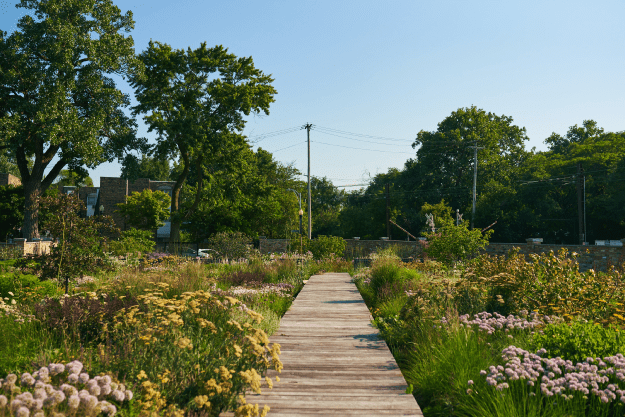
Research of Existing Projects:
The Theaster Gates Studio project that involved turning 13 abandoned lots into community garden space demonstrates the impact that greenery can have on mental and emotional wellbeing. There are stories of how the greenery transformed individuals’ daily routines and improve the rajectory of their day; by connecting with nature they are given time to reflect on the day ahead. Vela says “you don’t have to go up north to find beauty when it’s right here in your backyard” which reinforces the meaning behind our project that those from lower socioeconomic communities do not have access to greenery and have to travel. Therefore, through our project, we hope to provide beauty and joy to those who are not usually considered; making greenery more accessible within London.
Research accessed from: https://chicago.suntimes.com/news/2021/9/1/22652625/kenwood-gardens-st-laurence-school-arts-incubator-theaster-gates-greater-grand-crossing

Art on the Underground is a project that revitalised Seven Sisters Underground Station, an area long neglected and left unused for over a decade. Through the use of vibrant yellow tiles, the space was transformed, symbolising how forgotten places can be renewed with care and creativity. This transformation reflects the power of community involvement and thoughtful design. Inspired by this, we aim to bring the same spirit to our project on the Aylesham Centre, reinvigorating the area to make it feel valued, loved and central to the local community.
Art on the Underground project at Seven Sisters. Accessed from https://assemblestudio.co.uk/projects/art-on-the-underground and https://www.youtube.com/watch?v=J7oSzKwmD9s&t=319s
Intervention: Aylesham Centre
This led us to our intervention. Through mapping and research, we identified the Aylesham Centre, a retail arcade at the heart of Peckham, as our focus for place-making. Often overlooked, the centre holds deep significance for the local community. We aim to reimagine its future by fostering community participation and celebrating Peckham’s rich cultural diversity through art and connection.
The Aylesham Centre, established in the 1980s, remains a central feature of one of London’s most vibrant and diverse neighbourhoods. Located in South London, Peckham is home to a large Black and Black British population (primarily of African and Caribbean descent), alongside growing Latin American, Southeast Asian, and Eastern European communities. Our vision is to highlight this cultural richness by creating inclusive, participatory spaces that reflect the community’s identity and potential.
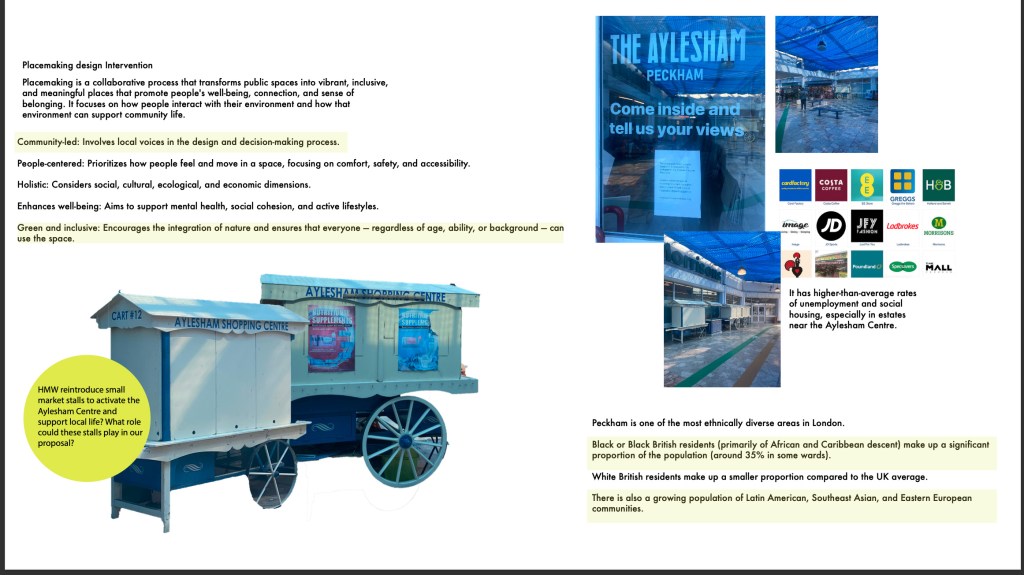

What is placemaking?
Placemaking is a collaborative approach to shaping public spaces, turning them into vibrant, inclusive environments that foster well-being, connection, and a sense of belonging. It considers how people engage with their surroundings and how these spaces can better support community life.
Our Aims:
- To amplify the voices of underrepresented communities in Peckham within local decision-making.
- To strengthen community support and visibility for small, independent businesses.
Our Objectives:
- Engage local residents, particularly marginalised and underrepresented groups, through workshops, surveys, and open forums to gather insights, concerns, and visions for the future of the Aylesham Centre.
- Co-create public space designs with the community that reflect their cultural, social, and environmental needs.
Field Research 19/05/2025:
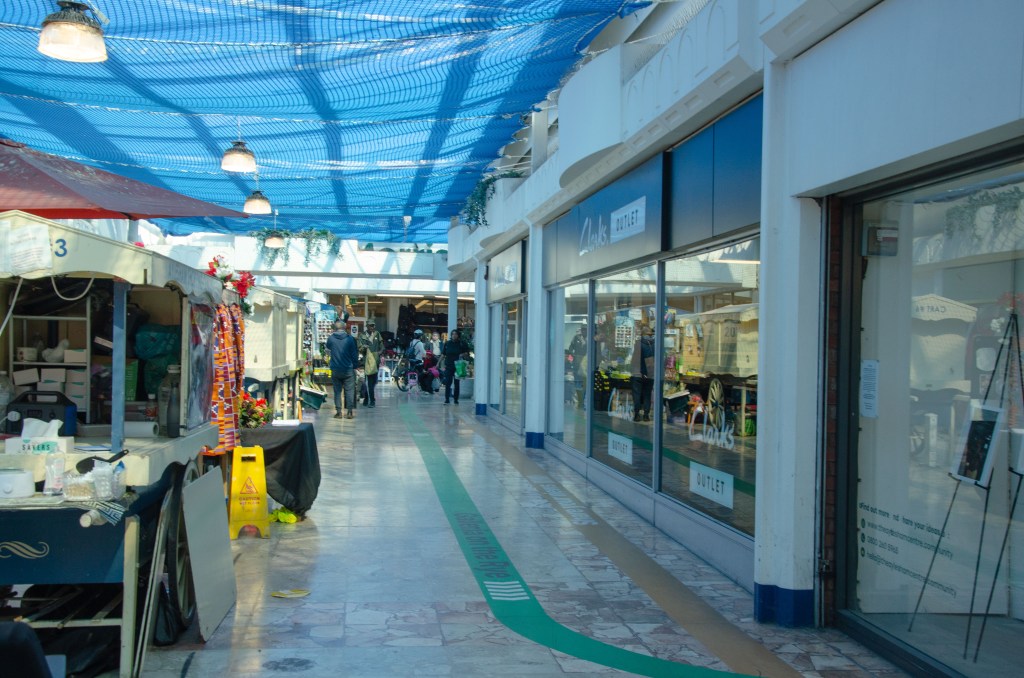
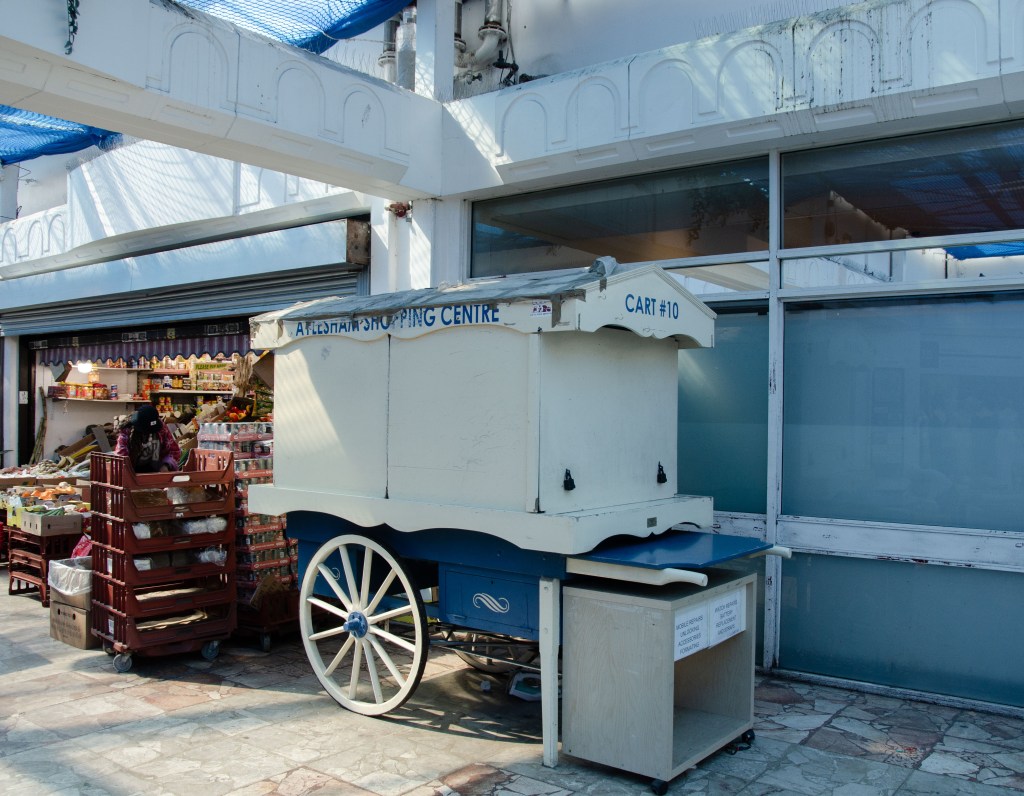
During our previous field research, we noticed a community-focused shop inside the Aylesham Centre. On Monday, May 19th, we returned to conduct further fieldwork and investigate the future of the development project surrounding the shopping centre. Despite having previously reached out via email, we received no response, so we decided to speak directly with local vendors inside the mall.
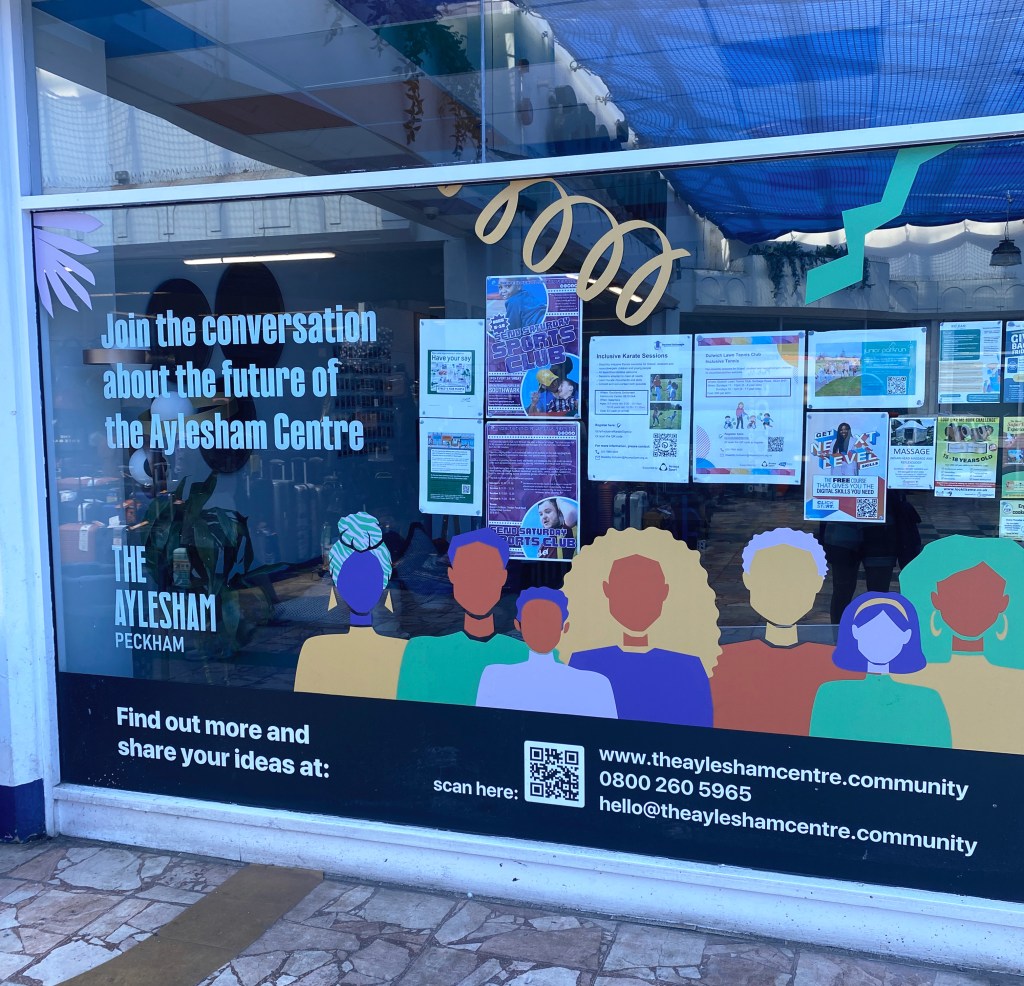
While the insights we gathered weren’t positive, they were deeply valuable. Of the five vendors we approached, only two were willing to speak with us; one a popcorn stand owner and the other a perfume seller. Both shared that the Aylesham Centre is set to be completely demolished and replaced with new housing developments and “fancy” shops, quoting the perfume vendor. The developers, a company called Berkeley, plan to build mostly one- and two-bedroom flats. Both vendors expressed frustration, as they’ve been operating in the centre for 10 and 15 years respectively, and now face being pushed out. They also noted that, while consultations and surveys were supposedly conducted, their voices have not been heard, despite claims of democratic decision-making on the developers’ website. One vendor mentioned that a recent Southwark newsletter suggested the developers proceeded without proper council permits, raising further concerns about transparency and accountability.
These conversations were disheartening, especially knowing how meaningful the Aylesham Centre is to the Peckham community. Our understanding of placemaking centres on community empowerment and amplifying unheard voices. Now that we know the centre will be demolished, our project pivots to a new question:
How might we reimagine the future of the Aylesham Centre by supporting underrepresented local voices and creating a space where community, small businesses, and stories of identity can thrive through art and collective action?
Proposal:
Our proposal begins with reimagining the future of the Aylesham Centre through collaborative collage artworks that reflect the identities, stories, and spirit of the Peckham community. These visual pieces aim to offer an alternative narrative to the current development plans that threaten to erase the centre’s social and cultural value. By creating a collective expression of what the space means to residents, we hope to inspire community solidarity and demonstrate that a different future is possible; one rooted in inclusion, creativity, and shared ownership. Community involvement is essential; amplifying local voices is key to envisioning and defending a future for the Aylesham Centre that truly serves Peckham.
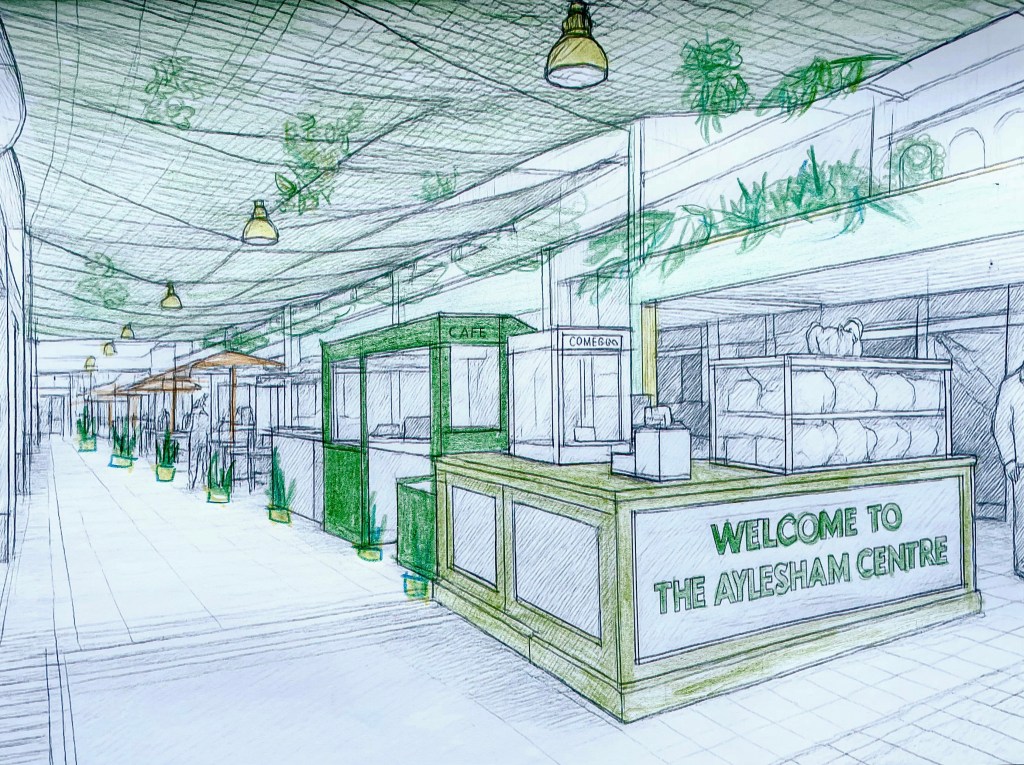
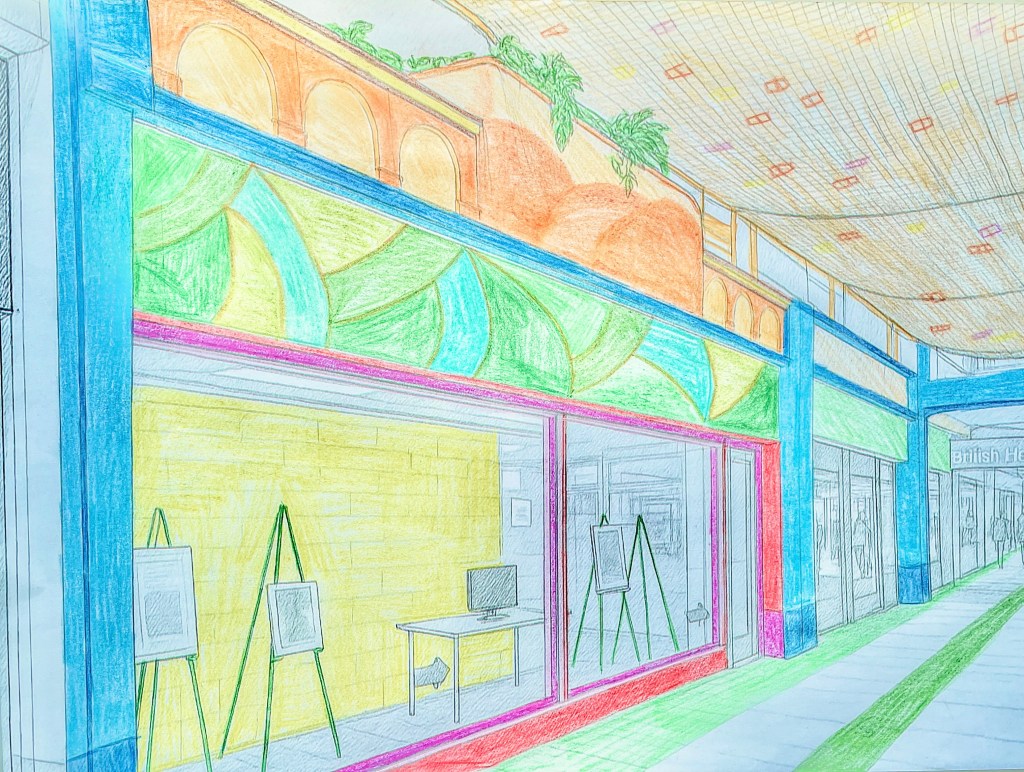
Sketches reimagining Aylesham Centre with plants, public seating, more colours as murals on vertical surfaces, and activate empty shops and gallery space for neighbourhood artists.

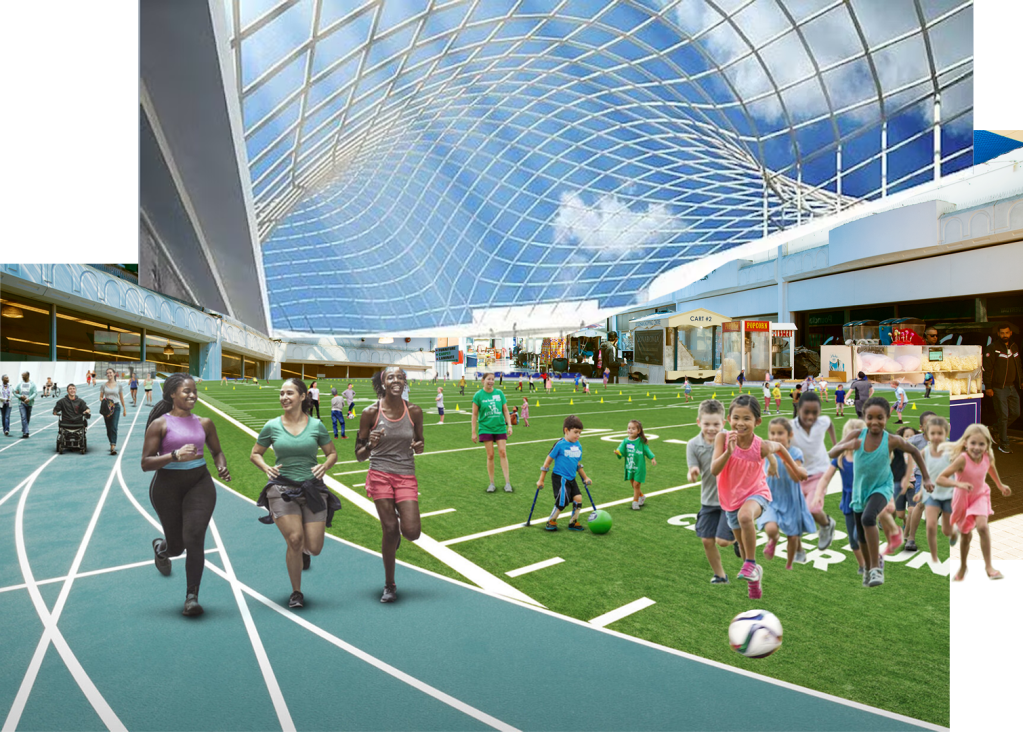
Collages exploring the possibilities of Aylesham Centre as a well-lit open space for multiple community uses, such as a craft market and sports ground, so local residents with different interests can all enjoy the space.
References:
https://www.sciencedirect.com/science/article/pii/S0921800924002210?utm_source
“Essencology of Placemaking: In Quest of an Inclusive System Dynamics between Power and Communities in the Urban Development Process” by Milagros Hurtig et al. (2025)
Contacts:
valenlandin@gmail.com (Valentina, designer and researcher)
olivia@4lees.co.uk / @o.livestudio (Olivia, graphic designer)
moohcynnam@gmail.com (Moohcynna, furniture designer)
angelicafun@gmail.com / @fragility.enroute (Angelica, curator and landscape designer)
 future communities